Electrician vs. Degree: Calculating the True Cost and Timeline of Electrical Apprenticeships in Georgia
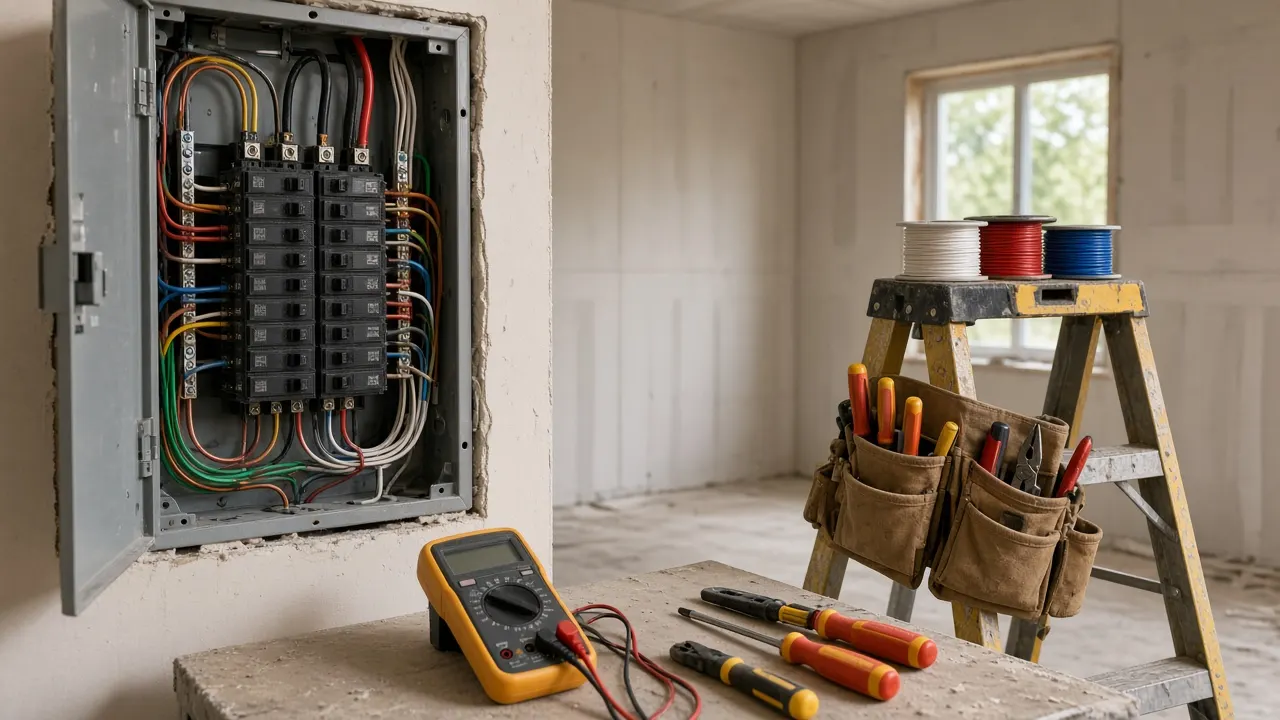
Calculating the True Cost: Apprenticeship Wages vs. College Tuition in Georgia
The decision between pursuing a four-year degree and entering a skilled trade—like becoming an electrician—is rarely straightforward. It involves comparing not just tuition dollars, but years of time, the cost of specialized tools, and the immediate earning potential. For students and parents in Georgia, the choice often boils down to two fundamentally different financial models: the upfront, debt-financed educational model of a traditional college degree, versus the earn-while-you-learn, regulated model of an apprenticeship.
Before diving into the specifics of electrical licensing and federal wage data, here is the most actionable insight you can use today: Do not treat the cost of a degree as merely the tuition bill. To accurately compare paths, you must calculate the Total Cost of Ownership (TCO) for both options.
The TCO Checklist:
- Degree TCO: Tuition + Fees + Books/Supplies + Living Expenses (estimated for duration) + Interest on Loans.
- Apprenticeship TCO: Tool Costs (initial outlay) + Training Materials/Fees + Time Off Work (if applicable) + Opportunity Cost (the wages you could have earned elsewhere during the apprenticeship period).
By applying this TCO framework, you move the conversation away from "which path is better" to "which path has the most favorable return on investment (ROI) for my specific financial profile." This guide will use federal data sources to break down the mechanics of the electrical trade and compare those metrics against the data surrounding higher education in Georgia.
Understanding the Electrical Apprenticeship Model and Licensing Hurdles
The path to becoming a licensed electrician in Georgia is highly regulated, which is both a safeguard for the public and a structured timeline for the worker. Unlike a college degree, which is an academic credential, an electrical license is a professional credential granted after proving competency in a specific, high-risk field.
The Structure of the Apprenticeship
An electrical apprenticeship is not simply "learning on the job." It is a structured, registered program that combines paid, on-the-job training (OJT) with classroom instruction.
- On-the-Job Training (OJT): This is where you accrue the necessary hours, working under the supervision of a licensed journey-level electrician. The federal Department of Labor (DOL) and local boards often mandate a minimum number of hours (often thousands) to prove competency.
- Related Technical Instruction (RTI): These are the classroom hours. They cover the theory, code requirements (such as the National Electrical Code, or NEC), blueprint reading, and safety protocols that cannot be taught solely on a job site.
Federal Data on Wages and Earnings
When assessing the financial viability of this path, the Bureau of Labor Statistics (BLS) provides critical data on average wages. As of the latest federal reports, electricians generally report median annual wages significantly higher than the national average, reflecting the specialized nature and high demand for their services.
Key Data Point Limitation: While the BLS provides excellent median wage data, remember that this is a median figure for the entire profession. It does not account for regional variations, the specific employer (union vs. non-union), or the experience level of the worker. Wages are highly dependent on the local Georgia market and the specific scope of work (residential vs. commercial/industrial).
The Hidden Costs of Entry
The most frequently overlooked costs are the tools and the required certifications. While many employers provide basic tools, a serious apprentice must budget for:
- Personal Tool Kits: Basic testing equipment, meters, specialized hand tools.
- Safety Gear: High-quality, required Personal Protective Equipment (PPE).
- Continuing Education: Licensing boards often require periodic continuing education units (CEUs) to maintain licensure, which is an ongoing cost.
Comparing Time-to-Earning: Apprenticeship vs. Degree
The most significant metric for many prospective students is the "time-to-earning." This measures how long it takes from the start of training to achieving a stable, high-paying income.
The Apprenticeship Timeline (The Accelerated ROI)
The electrical apprenticeship timeline is structured to keep the student earning money from day one.
- Duration: Typically ranges from 4 to 5 years, depending on the required hours and the intensity of the program.
- Earning Structure: Apprentices start at a percentage of the journey-level wage (e.g., 50% of the journeyman wage in Year 1) and receive incremental pay raises as they complete hours and pass exams.
- Financial Benefit: The student is paid throughout the entire process. The initial investment is time and effort, not necessarily large amounts of debt.
The Traditional Degree Timeline (The Delayed ROI)
A four-year degree, while providing a broad knowledge base, introduces a significant period of potential income loss and debt accumulation.
- Duration: Minimum of four years of full-time study, plus potential years of graduate school or required internships.
- Earning Structure: The student is primarily a consumer of educational services, with minimal income during the core years of study.
- Financial Risk: The primary risk is the debt load. Even with scholarships, the accumulation of student loan debt must be factored into the overall ROI calculation, as loan servicing can consume years of early career wages.
Deconstructing the Total Cost of Education and Training
To truly compare these paths, we must move beyond the "sticker price" and examine the components of cost.
The Financial Breakdown of a College Degree
When calculating the cost of a Bachelor’s degree, the following elements must be quantified:
- Tuition and Fees: The published cost per credit hour.
- Cost of Living: For out-of-state or commuter students, housing, food, and transportation costs are substantial and often underestimated.
- Opportunity Cost: This is the salary you forgo by spending four years in school instead of working. This is a crucial, often invisible, cost.
The Financial Breakdown of an Apprenticeship
The cost structure here is different because the wage is integrated into the training.
- Tooling and Gear: Budgeting for initial, specialized equipment.
- Training Fees: Costs associated with the classroom portion (RTI) and necessary testing fees.
- Income: The salary received, which offsets the cost of living and debt.
Operational Step: The Debt Comparison. If a student graduates with $40,000 in debt and starts earning $50,000 per year, the debt repayment schedule dictates a significant portion of their early career earnings. An apprenticeship, where the student is paid, allows the earning cycle to begin immediately, fundamentally altering the debt-to-income ratio in the early years.
The Role of Industry Certifications vs. Academic Credits
Many students assume that a college diploma is the only valid credential. However, in skilled trades, specific, recognized certifications often hold more weight with employers than general academic credits.
Industry Certifications: The Practical Metric
For an electrician, the most valuable credentials are those that prove adherence to safety standards and code compliance. These include:
- Local/State Licensing: The ultimate goal.
- OSHA Certifications: Mandatory safety training.
- Manufacturer Certifications: Specific training on systems (e.g., low-voltage, specific panel brands).
These certifications are highly specific and directly tied to job competency. They function as a specialized curriculum that complements, but does not replace, the foundational knowledge gained through the apprenticeship structure.
Academic Credits: The Theoretical Metric
A degree provides theoretical knowledge—history, literature, advanced mathematics, etc.—which builds critical thinking skills. While valuable for adaptability and career pivoting, these skills are often considered secondary to demonstrable technical competency when applying for entry-level trade jobs.
Synthesis: The ideal, modern career plan often involves stacking credentials. A student might pursue a technical certificate (e.g., HVAC, electrical theory) while simultaneously entering a paid apprenticeship. This strategy mitigates the time-to-earning delay associated with solely pursuing academic degrees.
Navigating the Georgia Landscape: Resources and Local Requirements
The regulatory environment for trades is managed at the state and county level, meaning that the exact requirements for an electrician in Atlanta may differ slightly from those in Savannah.
Finding Registered Programs
To avoid costly mistakes, prospective apprentices must verify that the program they join is registered with the appropriate local boards (e.g., the Georgia State Board of Architects, or specific local electrical authorities).
Checklist for Program Vetting:
- Is it Registered? Confirm the program is recognized by the state or a major union (e.g., IBEW).
- Is the Wage Structure Transparent? Ask for a detailed breakdown of the pay raise schedule.
- Is the Ratio Clear? Confirm the required ratio of OJT hours to RTI hours.
- What is the Exit Requirement? Understand the specific exam and testing process required for the final license.
The Value of Local Expertise
Because labor markets are highly localized, the best source of information often comes from local trade organizations, union halls, and established vocational schools that have direct relationships with local employers. These groups understand the current demand and the specific local code interpretations.
For a detailed, comparative look at how different career paths—from healthcare to construction—align with educational costs and time commitments in Georgia, you can compare owner tools.
Making the Decision: A Structured Workflow for Parents and Students
We recommend moving through a phased decision-making process rather than viewing it as a binary choice.
Phase 1: Self-Assessment (The "Why")
Before looking at job listings or tuition costs, answer these questions:
- Risk Tolerance: Am I comfortable with immediate, physical, on-site work, or do I prefer desk work and research?
- Financial Imperative: Do I need to start earning money within 12 months, or can I afford to defer income for 4+ years?
- Learning Style: Do I learn better through reading textbooks and lectures, or through physical repetition and immediate feedback?
Phase 2: Data Gathering (The "How Much")
Use federal data sources (BLS, DOL) to gather salary ranges for 3-5 potential careers. For each career, gather the required hours/years of training and the associated cost components (tools, fees, etc.).
Phase 3: Modeling (The "What If")
Create a spreadsheet that models the financial outcome for each path:
- Scenario A (Degree): (Years in School) $\times$ (Estimated Opportunity Cost) + (Total Debt).
- Scenario B (Apprenticeship): (Total Years) $\times$ (Average Annual Wage) - (Total Tool/Training Costs).
The path with the most favorable net financial outcome, factoring in the time value of money, is the most objectively sound choice.
Next step
Choosing a career path is a major financial and life decision. If you are ready to put this comparative workflow into practice, understanding how various educational and vocational paths align with your financial goals, browse live listings.
Compare every Georgia college
Independent data on every college in Georgia