Beyond the Tractor: Navigating the ROI of Agricultural Technology Careers in Georgia
Beyond the Tractor: Navigating the ROI of Agricultural Technology Careers in Georgia
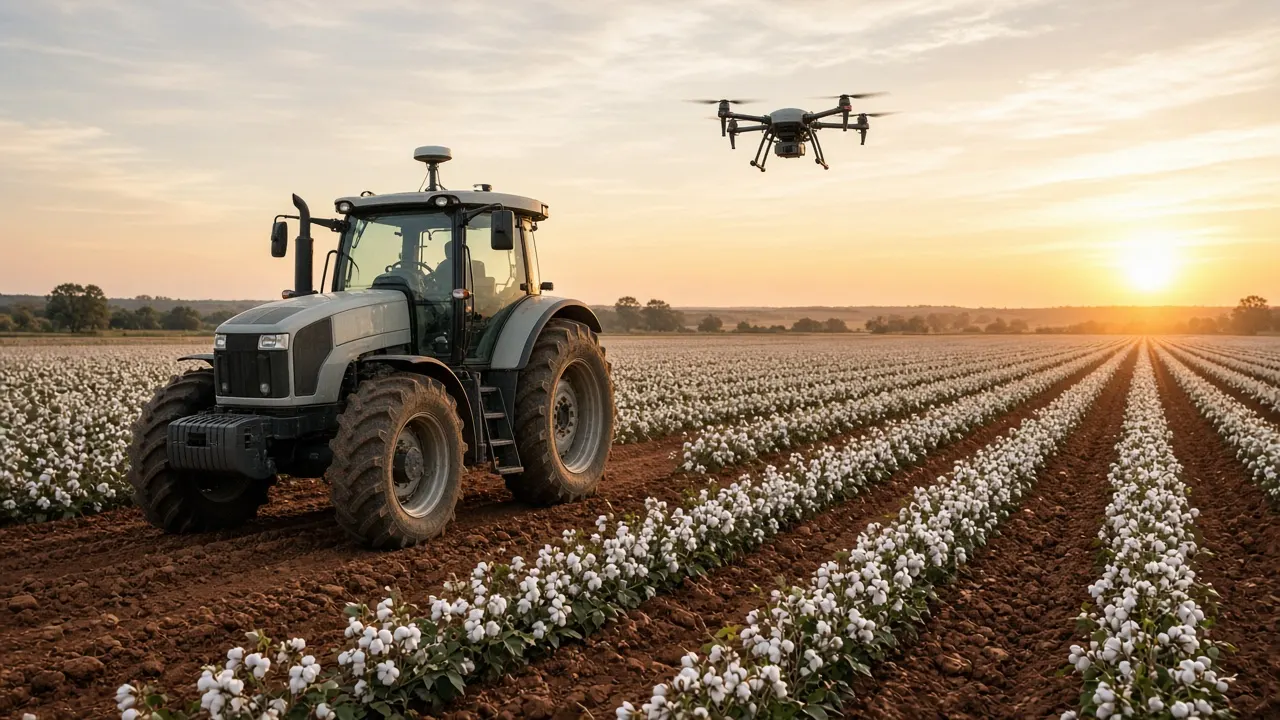
If you picture farming, your mind might conjure images of sun-baked fields, diesel engines, and manual labor. While those elements still exist, that picture is increasingly outdated. The modern agricultural sector—the one feeding Georgia’s rapidly growing population—is less about the tractor and more about the data stream flowing from it. It is a highly technical, data-intensive industry that operates at the intersection of engineering, computer science, and biology.
For students and adult learners considering a career path in this sector, the most valuable thing to understand today is that your degree needs to signal technical fluency, not just agricultural knowledge. The Return on Investment (ROI) in agricultural technology (AgTech) is exceptionally high, but the path to getting there requires strategic planning that goes far beyond simply enrolling in the nearest "Ag Science" program.
If you are feeling overwhelmed by the sheer volume of information—the job titles, the required software, the rapidly changing technology—take this immediate action step: Before looking at job titles or salaries, identify the three core technical skills you currently possess or are willing to learn (e.g., Python scripting, basic CAD, advanced Excel modeling). Then, structure your education around acquiring verifiable proof of those skills. This shifts the focus from what you want to do, to what you can prove you can do.
The Paradigm Shift: Why AgTech is a Data Science Problem
The shift in agriculture is not a gradual improvement; it is a fundamental technological revolution driven by the need for efficiency, sustainability, and resource optimization. This is often referred to as "Precision Agriculture."
Precision Ag is the application of technology to manage variability within a field. Instead of treating an entire 100-acre plot uniformly, AgTech allows operators to treat 100 different 1-acre zones differently—adjusting irrigation only where needed, applying fertilizer only where nutrient deficiencies are detected, and monitoring crop health via spectral analysis.
This capability requires expertise in several highly technical areas:
- Geographic Information Systems (GIS): Using mapping software to layer different types of data (soil composition, historical yield, water tables) onto a single map.
- Remote Sensing: Interpreting data gathered from satellites or drones (multispectral imagery) to assess plant health and detect stress factors invisible to the naked eye.
- Machine Learning/AI: Developing algorithms that predict outcomes—such as predicting the optimal harvest time based on weather patterns, or identifying early signs of disease before they spread.
When examining the job market, the metrics that matter most are those related to data handling and automation. According to the Bureau of Labor Statistics (BLS), occupations related to agricultural technology and engineering are projected to see robust growth. For instance, the BLS reports that the employment of agricultural engineers and related technicians is expected to grow faster than average. However, it is critical to understand the limitation of this metric: BLS growth projections are based on historical trends and do not account for sudden market disruptions, local equipment costs, or the rapid pace of private sector innovation.
To truly assess your ROI, you must look past the job title and identify the underlying data science function. Are you managing the data, or are you just operating the machine that collects the data? The former is the higher-paying, more resilient career path.
Core Technical Disciplines: The Skills that Command Wages
To successfully navigate this field, you need to move beyond the traditional "Ag Science" curriculum and build a portfolio of demonstrable technical skills. These skills are transferable, meaning they are valuable whether you work with corn, cattle, or urban vertical farms.
1. Mastering GIS and Spatial Data Analysis
GIS is arguably the most immediate and necessary skill in modern AgTech. It is the language of spatial data. Learning GIS means learning how to ask and answer questions like: "Where exactly is the nitrogen deficiency greatest?" or "Which portion of the field receives insufficient sunlight due to topography?"Actionable Step: Do not just take a GIS class. Seek out a project where you must apply* GIS to a real-world problem—such as mapping historical flood zones or analyzing local soil maps. Proficiency in industry-standard software (like ArcGIS or QGIS) is non-negotiable.
2. Introduction to Automation and IoT (Internet of Things)
The "smart farm" relies on the Internet of Things—sensors placed in the ground, weather stations, and robotic equipment all communicating data wirelessly. Your role might be to manage the data flow from these thousands of endpoints. This requires understanding basic networking, sensor calibration, and data integrity.- What to Learn: Basics of sensor technology, data logging protocols, and cloud computing platforms (e.g., AWS or Azure). This is where the engineering mindset meets the biological reality.
3. Data Modeling and Scripting
This is the most advanced, and most lucrative, area. When data is collected (e.g., temperature, humidity, yield measurements), it must be cleaned, modeled, and analyzed. This requires basic programming skills.The Skill: Python is the industry standard entry point for data science. Learning Python allows you to automate repetitive tasks, clean messy datasets, and build predictive models that tell farmers what will happen rather than just reporting what happened*.
Analyzing the ROI: Beyond the Median Salary
When assessing the financial return of any career path, the median salary figure provided by the BLS is a useful starting point, but it is critically incomplete. It tells you nothing about the cost of entry, the required continuing education, or the local market volatility.
The Cost vs. Compensation Equation
Your true ROI calculation must account for three major variables:
- The True Cost of Education (COE): This includes tuition, fees, and the cost of specialized equipment or software licenses required for training. A $20,000 program that requires an additional $5,000 in specialized field equipment is not a $20,000 program.
- Time to Earning (TTE): How quickly can you move from graduation to a paying job? Programs that require extensive, multi-year internships or capstone projects that delay employment are lowering your immediate ROI.
- Transferability of Skills: The highest ROI comes from skills that are valuable outside of agriculture. A data scientist who can apply GIS to farming can also apply it to urban planning, environmental consulting, or public health—significantly de-risking their career.
A Warning on Credentials: Do not assume a degree from an "Ag Science" department guarantees job placement in high-tech roles. Many curricula remain rooted in traditional agronomy. You must actively seek out programs that integrate computer science, data analytics, and engineering principles into their core coursework.
The Educational Path: Building a Hybrid Profile
Given the technical nature of AgTech, the most valuable educational profile is often hybrid—combining a foundational degree in a broad, transferable field with specialized technical certifications.
1. The Degree Foundation (The "What")
While a degree in Agricultural Science is relevant, consider majors that naturally intersect with the technical demands:- Environmental Science: Provides the biological and ecological context.
- Civil Engineering: Provides the understanding of large-scale infrastructure and resource management.
- Computer Science/Data Science: Provides the core analytical tools (Python, R, SQL).
The best outcome is often a degree in a technical field (like data science) coupled with a strong, project-based minor or concentration in agriculture.
2. The Certification Stack (The "How")
Certifications are often more valuable than the final grade on a transcript because they prove mastery of a specific, marketable tool.- Recommended Certifications: GIS certifications (e.g., from Esri), Python data analysis bootcamps, and cloud computing certifications (e.g., AWS Certified Cloud Practitioner).
- The Strategy: View your education as a stack of credentials. Your degree is the base layer; your certifications are the specialized, high-value tools you stack on top.
Hands-On Experience: The Portfolio Over the GPA
In AgTech, what you do matters far more than what you know from a textbook. Employers are not hiring potential; they are hiring problem-solvers.
The goal of your college years should be to build a professional portfolio—a digital folder containing 3-5 significant projects that demonstrate your technical skills.
Building a Project Portfolio: A Checklist
Project 1: The GIS Mapping Project: Use public data (e.g., USDA soil maps, NOAA weather data) to create a thematic map that answers a complex question about a local Georgia county. Goal: Prove spatial analysis.* Project 2: The Data Cleaning Project: Find a messy, public dataset (e.g., historical yield reports) and use Python to clean it, standardize it, and visualize the trends. Goal: Prove data manipulation and scripting.* Project 3: The Recommendation Model: Build a simple predictive model. Example: Given the last three years of rainfall data and the average soil type, predict the optimal planting window for a specific crop. Goal: Prove predictive modeling.*
This portfolio is your primary interview tool. It allows you to speak the language of the industry—the language of data—and prove that you have already operated beyond the classroom environment.
Mitigating Risk and Planning for the Future
The AgTech landscape is defined by rapid obsolescence. What is cutting-edge today—be it drone imaging or blockchain tracking—may be standard practice in five years. This volatility is the biggest risk to your career path.
The Anti-Risk Strategy: Focus on Meta-Skills
To protect your ROI, you must develop "meta-skills"—the skills that allow you to learn new skills quickly.
- Critical Thinking: The ability to look at a problem (e.g., low yield) and break it down into manageable data inputs (soil, water, pests, genetics) rather than accepting the first suggested solution.
- Communication: You must be able to translate complex data findings (e.g., "The spectral analysis shows a 15% chlorophyll deficiency in zone B") into actionable, non-technical advice for a farmer who has spent his life operating machinery. This is a communication skill, not a science skill.
- Adaptability: Actively seek out internships and projects that force you to use unfamiliar software or collaborate with people from vastly different backgrounds (e.g., an electrical engineer, a biologist, and a computer scientist).
When you are ready to put this workflow into practice, browse live listings to see which institutions in Georgia are emphasizing these technical, hybrid curricula.
Compare every Georgia college
Independent data on every college in Georgia